
premier dental connecticut logo
  • Pay my bill
  • Patient login
  • Blog
  • Contact
  • Dentistry Careers
  • Emergencies
  • Locations
    • I have a dental issue
    • Emergency Dentist
    • Epic Hygiene Biolase Treatment
    • General Dentistry Services
    • Gum Treatment
    • Root Canal and Endodontics
    • Tooth Extractions
    • I want to improve my smile
    • Cosmetic Dentistry Services
    • Dental Fillings Crowns Bridges
    • Dental Implants
    • Full and Partial Dentures
    • Implant-Supported Dentures
    • Invisalign®
    • Porcelain Veneers
    • SureSmile Aligner
    • Teeth Whitening
    • I need a check up or cleaning
    • Childrens Dental Care
    • Dental Exams and Teeth Cleaning
    • Dental payment options
    • Dental insurance
    • Smile Alliance Club
    • Dental financing
    • Special offers
    • Medicare Advantage
    • Good faith estimate
    • About us
    • Patient information
    • Dental reviews
  • Book appointment

Home

Blog

Causes of Bleeding Gums and Gum Disease

Causes of Bleeding Gums and Gum Disease

March 26, 2021 By Premier Dental of Connecticut

Causes of Bleeding Gums and Gum Disease

Periodontal Disease Basics

Periodontal disease, more commonly called gum disease, is an inflammatory disease that starts in the gums. It can range from mild to severe. In the disease's mildest form, gingivitis, it affects the outer part of the gums. At this stage, it's curable. If the disease progresses, the gums will pull away from the teeth, allowing the infection to get beneath the gums. Once this happens, the disease is still manageable, but not reversible. Without treatment, the infection can destroy the support structures of the teeth, causing them to become loose and possibly fall out or a dentist will have to pull them.

Healthy Gums Equal a Healthy Mouth

Gums provide a physical barrier between the bacteria-laden plaque in your mouth and the periodontal ligaments and bone that hold teeth in place. When gums are not healthy, they can let bacteria in, which will eventually destroy these structures. Gums also prevent the bad bacteria in your mouth from traveling throughout your body via your bloodstream.

The U.S. Centers for Disease Control says almost half of the people in the United States over age 29 have periodontitis. This cold hard statistic is alarming since periodontitis is a more advanced form of gum disease than gingivitis. It’s also been estimated that over 75 percent of adults will experience some form of gum disease in their lifetimes. Many of these Americans don't even know they have the disease, as it is usually painless until it becomes severe. Gum disease is the primary reason people age 29 and over loose teeth.

Gum disease can have a very negative impact on your gum health and your overall health. Because it’s entirely preventable, it’s important for you to understand more about periodontal disease and how it presents to avoid more serious issues. Don’t spend more time at the dentist office than you need to. Once the disease progresses past gingivitis, it makes it much more complicated to fix. Sometimes the damage that occurs when you have periodontitis is irreversible and you’ll need to work with your dentist to manage the condition for the rest of your life.

How Do Individuals Develop Periodontal Disease?

Individuals develop gum disease when they have accumulated plaque in their mouth. Without proper brushing, flossing and regular dental cleanings, plaque builds up between teeth and at the gumline. It can turn into tartar, which is hardened plaque that brushing and flossing can't remove. Plaque and tartar contain harmful bacteria that irritates the gums and causes them to become inflamed. This is known as gingivitis. Fortunately, gingivitis is reversible, but if it's left untreated, it can advance to a more serious form of gum disease called periodontitis.

Some people are more prone to get gum disease if they have certain risk factors, which include:

  • Tobacco use
  • Poor dental hygiene
  • Genetics - A family history of gum disease
  • Medications that reduce saliva flow
  • Illnesses that can compromise immune systems
  • Crooked teeth that are hard to brush and floss

What Are the Signs of Gum Disease?

Gum disease isn't painful until it's in an advanced stage. Symptoms you may notice include:

  • Gums that turn from pink to bright red or they appear purplish
  • Gums swell and look puffy and shiny
  • Gums hurt when you touch them
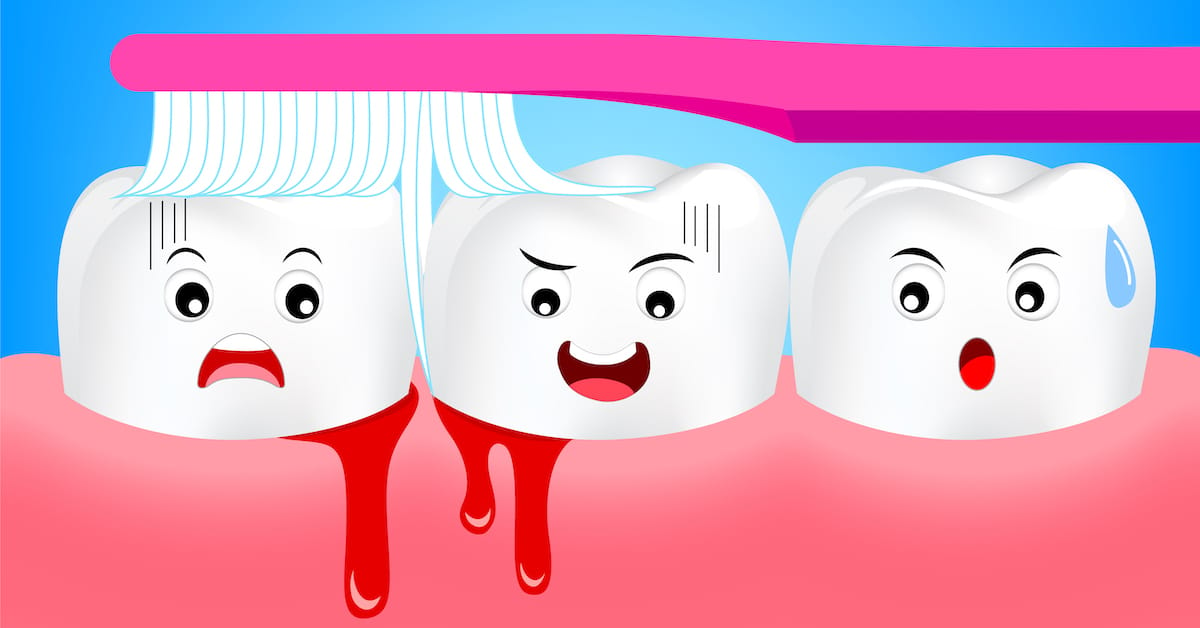
  • Gums bleed during brushing
  • Chronic bad breath
  • Teeth may migrate and create new spaces between them
  • Teeth become loose and wiggle in the mouth
  • Chewing becomes painful

Only a dental professional can accurately diagnose gum disease. Please make an appointment if you notice any of these signs of gum disease.

How Many Types of Gum Disease Exist?

There are many types of gum disease and different stages of the disease. When you have one, you want to make sure you don’t reach the more advanced stages as that can be quite painful and require expensive trips to the dentist. The most common ones include:

  • Gingivitis - Gingivitis is the early stage of periodontal disease, when the gums become infected and inflamed by the bacteria in plaque. It's quite common, especially with individuals who don't remove plaque from around their gums with regular brushing, flossing and dental cleanings. Fortunately, gingivitis is easily treated by a dentist and reversible with better dental hygiene. If you ignore gingivitis, it may progress to periodontitis, a more destructive form of gum disease.
  • Chronic Periodontitis - Generally, chronic periodontitis develops when gingivitis isn't diagnosed or treated. Pockets form between the teeth and gums, allowing bacteria to enter under the gums. The disease progression is relatively slow, but there can be periods of rapid progression. Treatment, which is usually a deep cleaning and antibiotic therapy, is essential to prevent eventual tooth loss. Patients also have to practice excellent dental hygiene at home. Smokers should quit or treatment will be less effective.
  • Aggressive Periodontitis – Aggressive periodontitis, either generalized or localized, can lead to tooth loss with an early diagnosis and treatment. The disease is far less common than chronic periodontitis, and it is often seen in healthy, younger individuals, often under age 30. It is especially prevalent in patients with a family history of the disease. Patients with aggressive periodontitis have severe gum infections and rapid bone loss.
  • Necrotizing Periodontitis – Unlike many forms of gum disease, necrotizing periodontitis can cause severe pain. The soft tissue and bone necrosis is typically occurs in people under 30 who are extremely malnourished, under extreme, prolonged stress, or who are HIV positive.

How Can I Maintain Good Gum Health?

The most important thing you can do to maintain your gum health is to avoid plaque accumulation in your mouth. Floss once daily and brush at least twice. Make sure you brush the front, back and chewing surface of every tooth. This should take two minutes. Schedule a routine exam and dental teeth cleaning with a dentist in Connecticut every six months. If you have plaque buildup, your dentist or dental hygienist can make suggestions for a more effective dental care routine. If you smoke, quit. Tobacco use makes it easier to get gum disease, and it makes the disease harder to treat.


Recent articles

Tooth sensitivity while eating ice cream Tooth Sensitivity in Connecticut
Taking Care of Your Smile in Connecticut Taking Care of Your Smile in Connecticut
Affordable Smile Makeover Options in Connecticut Affordable Smile Makeover Options in Connecticut

Book your appointment today.

Book appointment
premier dental connecticut logo
  • Premier Dental of Connecticut in Danbury
  • Premier Dental of Connecticut in Fairfield
  • Premier Dental of Connecticut in Farmington Valley
  • Premier Dental of Connecticut in West Hartford
  • Childrens Dental Care
  • Cosmetic Dentistry Services
  • Dental Exams and Teeth Cleaning
  • Dental Fillings Crowns Bridges
  • Dental Implants
  • Emergency Dentist
  • Epic Hygiene Biolase Treatment
  • Full and Partial Dentures
  • General Dentistry Services
  • Gum Treatment
  • Implant-Supported Dentures
  • Invisalign®
  • Porcelain Veneers
  • Root Canal and Endodontics
  • SureSmile Aligner
  • Teeth Whitening
  • Tooth Extractions
  • Find a dentist near you
  • Privacy policy
  • Notice of Privacy Practices
  • Site map

© 2026 Premier Dental of Connecticut. All rights reserved. The above-listed practice complies with applicable Federal civil rights laws and does not discriminate on the basis of race, color, national origin, age, disability, or sex. Notice of non‑discrimination.

(203) 617-0754
(203) 617-0752
(860) 506-3819
(860) 506-3818